The shot was simple, almost ordinary — an everyday moment of a woman stepping out of the Caribbean sea, sunlight catching the water in the same way it had the day before, and would again the day after.
But tourism rarely sells a place outright. What it really trades in are possibilities. The possibility JTB presented was simply this: come closer. This place, these people — this could be you.
The early 70s needed relatability. Not the grandeur of paradise, but the intimacy only afforded by an image of a person you could imagine meeting, bumping into at the café or over a beer at the beach bar. A face that translates a nation into something “knowable” with one glance.
The genius of the image is how little it actually shows.
No sweeping mountains or beach landscapes. No bustling streets full to the brim with vendors. Just a woman, stepping out of the sea, the word JAMAICA printed across her chest as if the place itself could be worn. In a single frame, geography and identity became one, the island not described but embodied.
And yet, there is a small but important twist in the story. Sintra Bronte — the face that came to symbolize Jamaica for millions of viewers worldwide — wasn’t even Jamaican. In a place built on the idea of “Out of Many, One People,” where African, Indian, Chinese, Syrian, Lebanese, and European lineages and cultures have been blended into everyday life, choosing a single face to stand in for the nation was never going to be simple. Still, the decision also reflected the realities of tourism at the time: an industry speaking largely to foreign audiences.
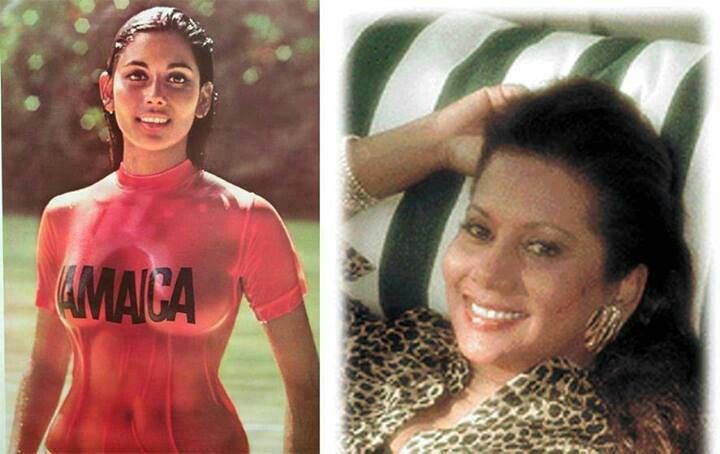
And perhaps that tension is part of why the photograph endured. It doesn’t resolve the question of representation; it sidesteps it, offering something more aspirational instead. The promise was not just that Jamaica was beautiful — the world knew this by now. Rather it was the promise that for a moment, standing in its sun and sea as Sintra did, that you might look and feel just as radiant too.