Read that list again. Before the reggae, before the carnival, before any of the things Britain now files under “Caribbean influence,” the skills that would reshape how the country dressed came over on the boat. Not as metaphor. As cargo, as labour, as men who could cut a suit.
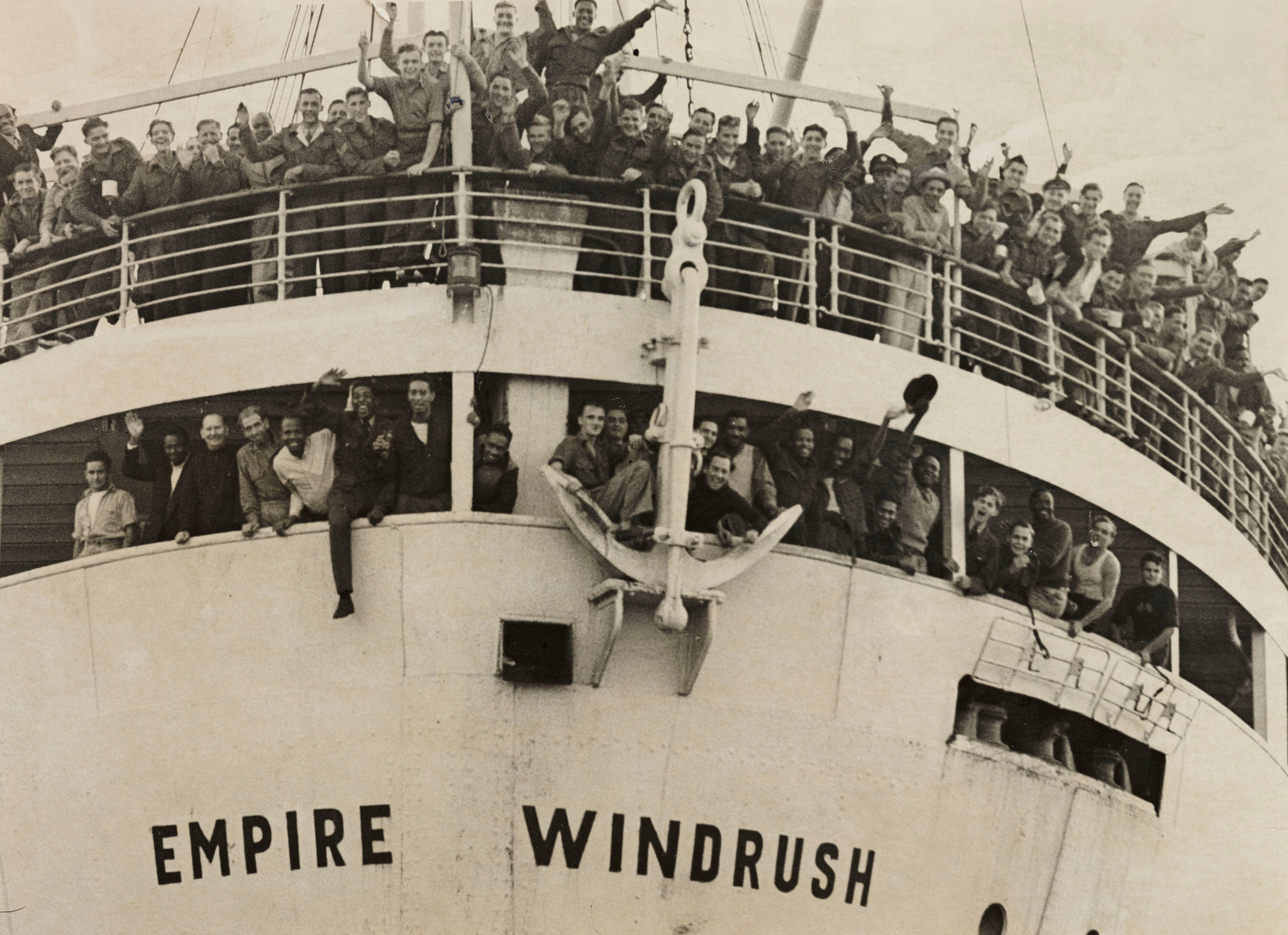
The Thurrock Gazette covered the arrival with a line that has aged into something like poetry: the Jamaicans, it reported, came ashore “dressed in an odd assortment of clothes, many wearing ties of dazzling designs.” You can feel the condescension in it. You can also feel the thing the condescension was trying to manage — that these people had arrived with a sense of style the reporter didn’t have a category for.
Any Black Caribbean designer working in Britain today is shaped by the Windrush whether they invoke it or not.
Not because they choose the reference. Because the reference is structural. It’s the ground they’re standing on.
To understand why, you have to hold two facts next to each other. The first is that Britain got rich on its colonies. The Caribbean was, for two centuries, an economic engine — sugar, and the enslaved labour that produced it, financing a good deal of British wealth. The second is that by the mid-twentieth century, when the engine had done its work and the war had gutted the domestic labour force, Britain invited the descendants of that colonial project to come and rebuild the mother country. They arrived as citizens. The 1948 British Nationality Act said so.
What they found was a country comfortable with empire at a distance and deeply uncomfortable with it up close. Colonialism had always happened over there. Now it was at Tilbury, on the bus, in the boarding house window with the sign reading No Irish, No Blacks, No Dogs. The Windrush generation was, in a sense, Britain being made to look at its own history in the face. Empire, coming home to collect.
And they dressed for it. This is the part that matters for our purposes. The art historian Christine Checinska has described Caribbean migrants dressing well “as a way of showing respect for ourselves and to others” — a discipline passed down like an heirloom. The trilby was among the most-packed items men brought. Suits were fully lined, made from good cloth, often by those same tailors from the manifest working out of garden sheds in Camberwell. In a country where your skin made you both hyper-visible and permanently suspect, a sharp suit was not vanity. It was armour. It was an argument. It said: look at me, and try to hold your idea of me at the same time.
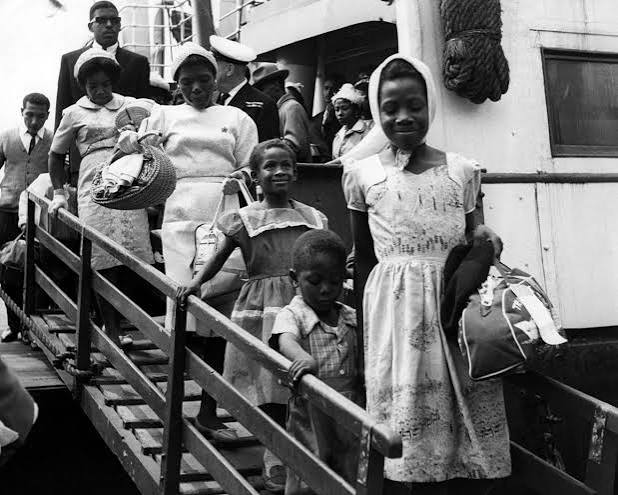
That is the inheritance. Not a colour palette. A stance.
Grace Wales Bonner’s father was the youngest child of a family that came from Jamaica in the Windrush generation. She grew up in South London, between Dulwich and Stockwell, and he handed her a reading list before he handed her anything else — Frantz Fanon, Édouard Glissant, Aimé Césaire, Derek Walcott. The postcolonial canon as bedtime story. When she launched her label in 2014, straight out of Central Saint Martins, the clothes carried that scaffolding without collapsing under it.
Look at the Jamaica Fair Isle vest she made — a knitted sleeveless piece that takes a thoroughly British knitwear tradition and runs it through a colour combination anyone from the Caribbean would recognise on sight. That single garment is the whole argument in miniature. It doesn’t reject British heritage; it doesn’t dissolve into Caribbean nostalgia. It puts the two in the same object and refuses to resolve the tension. For her lovers rock pieces, she worked from John Goto’s photographs of young British Caribbeans dressed for reggae nights at a Lewisham community centre in the 1970s — the second-generation kids, the children of the manifest, inventing a way to be both things at once.
She has been explicit that this isn’t nostalgia. “I started off with the intention of representing that there is not one resolved idea of Blackness,” she told Farfetch. The operative word is resolved. She’s not settling the question. She’s keeping it open, which is harder.
In October 2025, Hermès named her creative director of its menswear — the first woman of Black heritage to lead a major luxury house. Six months earlier, Lewis Hamilton had worn her tailoring to the Met Gala, whose theme that year was “Superfine: Tailoring Black Style,” an entire blockbuster exhibition built around the idea that Black dandyism is a serious sartorial tradition rather than a footnote. The manifest tailors would have understood the Met show completely. It was their argument, finally hung on a museum wall.
Nicholas Daley makes the structural point differently, and maybe more literally. His father is Jamaican, his mother Scottish; his parents ran one of Scotland’s first reggae clubs, in Edinburgh, from 1978 to 1982 — his dad DJing off a sound system called Iman Slygo, his mum on the door. His Jamaican grandfather was a shoemaker. In family photos from the eighties, his father is in lime-green suits and big-checked yellow jackets. That is a Windrush wardrobe: the dazzling ties the Gazette couldn’t categorise, worn a generation on with total confidence.
What Daley does with tartan is the thing to watch. He commissions bespoke Scottish cloth from heritage mills — Lochcarron, the Dundee waterproofers Halley Stevenson — and cuts it into garments that carry reggae and jazz in their bones. His runway shows are jam sessions, live jazz trios, musicians walking the clothes. He weaves the Jamaican and the Scottish into a single bolt of cloth, which is a more honest image of Black Britishness than any purely Caribbean reference could be. He’s not visiting his heritage. He’s wearing all of it at once, because it’s all his.
“My role as a British Black designer is that I need to tell the stories that I believe in and tell them authentically.”
Note that he doesn’t say Caribbean designer. He says British Black — the hyphen doing exactly the work Windrush forced into being.
Here is where the heritage story turns and shows its teeth.
In 2018, it emerged that the British government had spent years wrongly treating members of the Windrush generation as illegal immigrants. Under the “hostile environment” policy, people who had arrived legally as children, often on their parents’ passports and never issued documents of their own, were asked to prove decades of residence they had no paperwork for. They lost jobs and homes. They were denied NHS care. At least eighty-three were deported to countries some hadn’t seen since childhood. Twenty-three people died before receiving a penny of the compensation they were owed.
The same generation invited to rebuild Britain was, within living memory, told by Britain to prove it had the right to exist there. The engine, reclassified as a burden. The sin, briefly visible again before the machinery moved to file it away.
You cannot, I think, look at Wales Bonner’s unresolved Blackness or Daley’s woven double-heritage without this sitting underneath it. The clothes are beautiful, and the beauty is not decoration — it’s the same argument the manifest tailors were making in their Camberwell sheds, the same one the men in dazzling ties made walking down the Tilbury gangway. We are here. We were always here, in a sense, because your wealth was built on us. Look at us, and try to hold your idea of us at the same time.
That’s why the Windrush keeps surfacing in British fashion, and why it will keep surfacing as long as there are Black Caribbean designers in Britain to surface it. It isn’t a trend they reach for. It’s the condition they design inside. The reference is the reckoning, still unfinished, wearing a very good suit.