Her name isn’t written down anywhere. You can look — people have — and the first Jamaican woman to tie a length of madras plaid around her head is simply not in the record, because nobody holding a pen in that century thought she was worth the ink. What survives is the cloth: cheap cotton check, red mostly, woven in a British mill off the back of a South Indian craft nobody in that mill could be bothered to understand, and shipped out by the bale. She didn’t pick it. It arrived. What she picked was the knot — two peaks, pointing up and back, a shape with nothing English in it at all. Now run the tape forward. Two centuries on and that same knot is sitting on Louise Bennett-Coverley’s head under stage lights, a woman with RADA training and a folklorist’s vocabulary wearing market-woman plaid in front of an audience, on purpose, daring the room to find it funny. Run it forward again. It’s Heritage Week in October, Culture Day at some high school in Kingston, and a fifteen-year-old is in the bathroom before assembly safety-pinning a bandana skirt her aunt ran up on a machine the night before, complaining that it itches, with no idea she is wearing an argument that took two hundred years to win. Three women. Same cloth. None of them chose the fabric. Every one of them chose the knot.
That is the whole piece, if you want it in one breath. What follows is why it took so long, and what it cost.
The fabric isn’t Jamaican. It never was.
It comes from Madras — the South Indian city now called Chennai — where a tie-dye craft called bandhani produced silk worth actual money. The name gives it away. Bandana comes from the Sanskrit bandhna, “to tie.” So most Jamaicans wearing this cloth as a birthright are using a word from a language their ancestors never spoke, to describe a dyeing technique their cloth doesn’t use. Nobody teaches you that part in school.
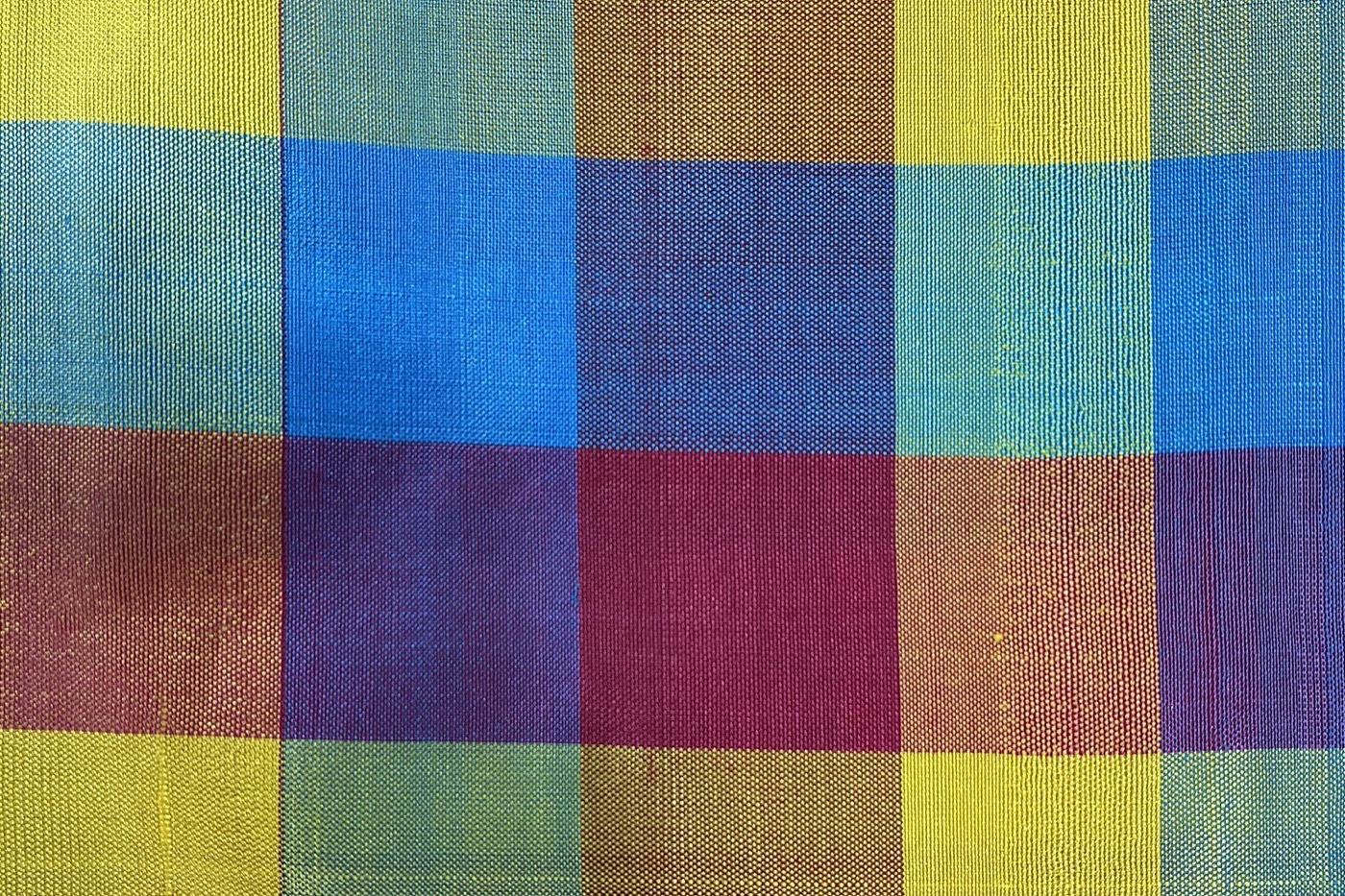
Because what reached Jamaica wasn’t the silk and it wasn’t tie-dyed. British manufacturers in the nineteenth century took the idea of madras and mass-produced a flattened knockoff: cotton, woven in a plaid check, lighter and cheaper than the thing it was imitating. This is the empire’s whole method in a single object — take a craft from one colonised place, strip it down to a pattern, run it off by the mile, and post it to every other colonised place as utility cloth. The same bolt that dressed a market woman in Kingston might dress one in Calcutta. Empire had a house style, and it was cheap plaid.
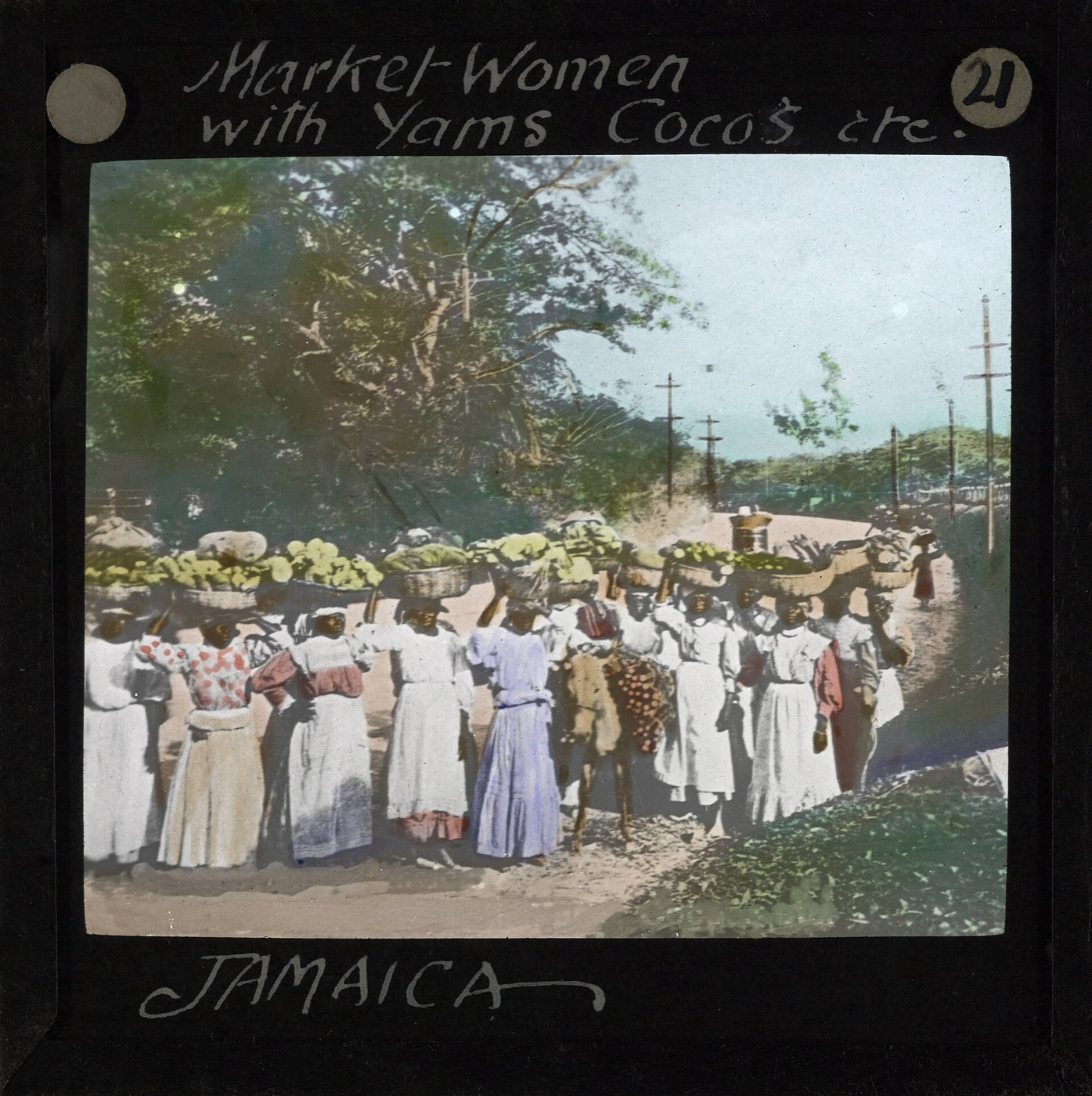
In Jamaica the cloth landed at the bottom and stayed there. It was worn by the enslaved and then, after emancipation in 1838, by the working class who inherited the position without much of the freedom — the higglers, the market women carrying baskets on their heads and selling produce in the sun all day. To wear bandana in nineteenth-century Jamaica was to announce exactly where you stood without opening your mouth. It was a uniform in the way a uniform tells everyone what you are before you speak.
And then the women with the least reason to love the cloth started doing something with it.
They wore what they were given, and they wore it their own way. The head-tie was the tell. Knotted into a wrap with two peaks pointing up and back — nothing British about that shape, and everything West African, rooted in head-wrapping traditions the women carried over the Middle Passage in memory when they couldn’t carry the cloth. The empire supplied the material. The women supplied the meaning. That’s the trade, and it is the only part of the exchange that was ever voluntary.
It sharpens if you look sideways at the French Antilles. In Martinique and Guadeloupe the same madras headwrap turned into an actual language: the number of points a woman tied into her wrap said whether she was single, married, or otherwise spoken for. A code readable across a whole community, in a place where literacy was forbidden and saying a thing out loud could get you hurt. Cloth doing the job that words weren’t allowed to do. Jamaica’s bandana never got that systematic, but it was running the same play — people encoding themselves into the one material they had, because it was the one material they had.
Then one woman changed what the cloth meant, more or less on purpose.
Louise Bennett-Coverley — Miss Lou — was not a higgler. She trained at the Royal Academy of Dramatic Art in London and lectured at the University of the West Indies. Folklorist, poet, the woman who spent a career insisting that Patois was a language and not broken English, back when respectable Jamaica was embarrassed by the dialect and the cloth in roughly equal measure. She could have dressed in any register she wanted. She picked the market woman’s plaid.
That choice was the argument. When Miss Lou stood on stages around the world in the bright bandana skirt and the two-peaked tie, she was doing the one thing a market vendor in the same outfit could not do on her own: lending the cloth her status. Here was a woman the establishment could not wave off, wearing the dress of the women it waved off every single day, and refusing to be embarrassed by a single thread of it. The Jamaica Information Service credits her specifically with moving bandana from the dress of colonial labour to the centrepiece of national celebration. She didn’t design a national costume. She picked up what the country had thrown down and wore it like it was worth something — which was always her point.
So — perfect national dress, or a complicated one?
Both, and it doesn’t resolve. The clean reading is true as far as it goes: a people took the cloth of their subjugation and made it the cloth of their pride, and that reclamation is about the most Jamaican move there is — same alchemy that turned the plantation’s leftovers into ackee and salt fish and turned English into Patois. The cloth is beautiful. The pride is real. None of the celebration is fake.
But the origin doesn’t rinse out just because the meaning changed. Call colonial work-cloth a “national costume” and you have built the wound into the holiday. Every year the plaid says two things at once and you cannot make it say only the nicer one. This is who we chose to be. And underneath it: this is what they gave us to wear while we were theirs.
Which is exactly why it works. A flag designed clean by an independence committee carries nothing; this carries everything — India, Britain, West Africa, the Kingston market, the imposition and the reclamation, the mill and the higgler and the woman from RADA who tied it in two peaks and dared anyone to laugh. Jamaica chose to represent itself with the thing it was once made to wear, and chose not to hide where it came from. Go back to that fifteen-year-old in the school bathroom, itching, pinning the skirt, annoyed about it. She doesn’t know the name of the first woman who tied this cloth either. Nobody does. But she’s tying the same knot, and that is how the argument gets passed down — not in a name, in a shape.